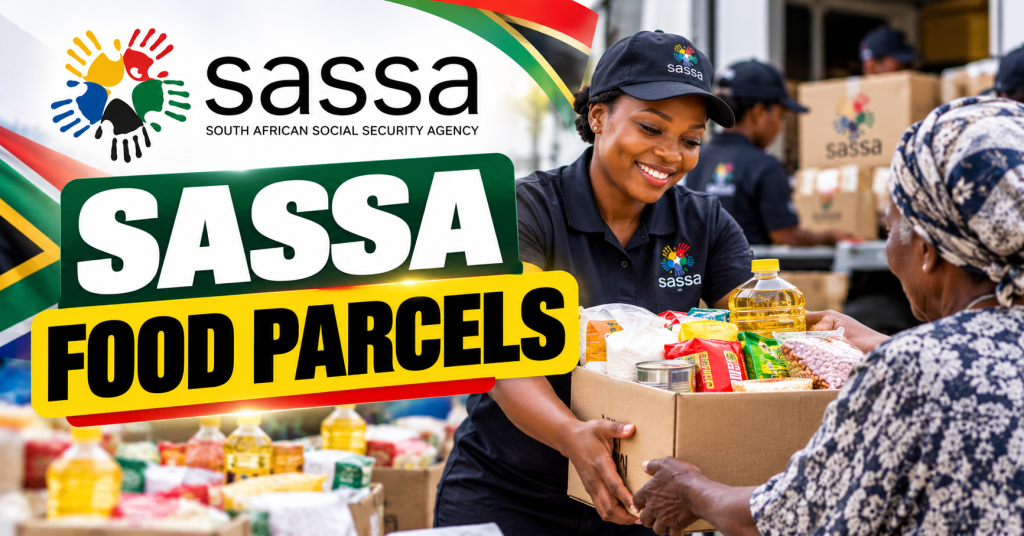
SASSA Food Parcels: What South Africans Need to Know About Emergency Food Assistance
Households facing unemployment, a sudden loss of income or a serious family emergency may struggle to afford basic food. In these circumstances, finding trustworthy information about government assistance can make an important difference.
The South African Social Security Agency (SASSA) administers the Social Relief of Distress (SRD) programme, which provides temporary assistance to people experiencing serious hardship. Depending on the circumstances and arrangements available, assistance may take the form of food parcels, food vouchers or other support. The South African Government’s official guidance explains that this relief is intended for people who cannot meet their families’ most basic needs. https://www.gov.za/services/services-residents/social-benefits/social-relief-distress
However, there is no basis in the information reviewed for claiming that every SASSA grant recipient automatically qualifies for a food parcel or that a new nationwide food parcel application drive is currently open. Assistance is assessed according to the applicant’s circumstances and the programme’s applicable rules.
This guide explains how to seek emergency assistance, what documents may be needed, how to verify announcements and how to protect yourself from fraudulent application links.
1. What are SASSA food parcels?
Food parcels are one possible form of short-term emergency assistance for eligible people experiencing severe hardship. They are intended to help households meet immediate food needs while they deal with a crisis or seek longer-term support.
The government’s Social Relief of Distress guidance identifies circumstances such as:
- A household experiencing an emergency or disaster, such as a fire.
- A person waiting for a child support grant application to be processed.
- A breadwinner’s death, leaving the family without adequate support.
- A person who cannot work temporarily because of a medical condition.
- A household facing serious hardship with no adequate means to meet basic needs.
These are examples of circumstances described in government guidance, not a guarantee of approval. Each case must be assessed, and the assistance available may vary.
Official reference: South African Government — Social Relief of Distress.
2. Who may qualify for emergency food assistance?
People experiencing genuine and serious financial hardship can contact SASSA to ask whether they qualify for Social Relief of Distress.
Useful Links:
Eligibility depends on the applicable rules and the evidence supplied. When contacting SASSA, explain your circumstances honestly and ask which documents are required for your particular situation.
Your circumstances may include:
A sudden emergency: For example, a fire, flood or another incident that has made your home unsafe or destroyed essential belongings.
Loss of family income: A household may face immediate difficulty meeting basic needs after the death of a breadwinner or another major change in its financial circumstances.
A delay in receiving assistance: Some people may need temporary support while waiting for a relevant grant application to be processed.
Temporary inability to work: A medical condition or another qualifying circumstance may leave a person unable to earn an income for a period.
These examples are not a complete list of eligibility conditions. Do not assume that unemployment alone, having children or receiving a particular grant automatically establishes eligibility. Confirm the current requirements with SASSA.
3. How to ask SASSA for food assistance
If your household cannot afford basic food, use the official government guidance and SASSA’s verified contact channels to establish what assistance is available.
Step 1: Contact SASSA or visit an office
Start with the official Social Relief of Distress information page:
https://www.gov.za/services/services-residents/social-benefits/social-relief-distress
You can also contact SASSA through its published toll-free number, 0800 60 10 11, or visit your nearest SASSA office to ask about applying.
Step 2: Explain your situation
Describe why your household needs urgent assistance. Explain whether you have experienced a disaster, lost family income, are waiting for a grant decision or face another serious hardship.
Do not exaggerate or invent circumstances to improve your chances of approval.
Step 3: Ask which documents are needed
The government’s guidance lists documents that may include a South African identity document and children’s birth certificates. Depending on your situation, supporting evidence may also be requested.
If documents are missing because they were lost in a disaster or have not yet been issued, explain this to the official and ask what alternative evidence is acceptable.
Step 4: Complete the required application process
Follow the instructions given by SASSA. The official government guidance says the application form for Social Relief of Distress is obtained from a SASSA office, so confirm the current submission procedure before relying on an online form shared through social media.
Step 5: Keep any reference details
If you receive an application reference or written instructions, keep them in a safe place. Ask how and when you can follow up on the application.
Important: Applying does not guarantee that a food parcel or voucher will be approved. The type of assistance and timing depend on the assessment and available arrangements.
4. Documents to prepare
Preparing relevant documents can help you explain your circumstances when seeking assistance. The exact list depends on your case, so verify it with SASSA before making a trip.
Documents that may be relevant include:
- Your South African identity document or other accepted identification.
- Birth certificates for children included in the application, where applicable.
- Evidence of the emergency, such as a report relating to a fire or disaster.
- Information about a pending grant application, if relevant.
- Supporting information about household income or the loss of a breadwinner, where requested.
- An affidavit or alternative supporting evidence if identity or birth documents are unavailable and SASSA accepts it for your circumstances.
Do not send original identity documents or copies containing personal information to strangers on Facebook or WhatsApp. Submit documents only through the verified process.
5. Are SASSA food parcels available everywhere in South Africa?
The availability and form of emergency assistance can differ according to the circumstances, provincial arrangements and the needs being assessed.
For example, government reports have documented targeted relief efforts following disasters. In June 2024, SASSA reported assistance to families affected by a devastating storm in Tongaat, KwaZulu-Natal. In June 2025, SAnews reported SASSA support for families affected by floods in the Eastern Cape. These reports demonstrate that disaster-related assistance can be organised for affected communities; they do not establish that food parcels are available to every household nationwide.
References: Government report on Tongaat storm relief and SAnews report on Eastern Cape flood assistance.
If you live in a rural area or a community affected by a disaster, contact SASSA and your local municipality or Department of Social Development to ask whether an assessment or relief operation is taking place. Do not travel long distances based only on an unverified social media poster.
6. Beware of fake SASSA food parcel application links
Food assistance scams can target people who are already under financial pressure. A message may promise food parcels, grocery vouchers or cash to anyone who completes a short online form.
Africa Check reported on 12 November 2025 that social media posts claiming SASSA was offering food parcels, vouchers or cash through questionable links were scams. The report highlighted warning signs such as unofficial websites, vague promises and requests to send personal information through private messages.
Read the fact-check here:
https://www.africacheck.org/fact-checks/meta-programme-fact-checks/no-south-africas-social-security-agency-not-giving-out-food-parcels-cash-or-vouchers-through-dodgy-links
Before responding to an announcement, use these precautions:
- Check whether the information appears on an official government or SASSA website.
- Do not trust a link merely because it uses the SASSA name, logo or photographs.
- Do not pay a registration fee to someone promising to secure a food parcel.
- Never disclose your bank PIN, password or one-time password.
- Be cautious of messages claiming that everyone in all nine provinces will receive assistance by a specific date without an official announcement.
- Confirm suspicious offers through SASSA’s official contact channels.
A genuine-looking poster is not proof that a programme exists. When in doubt, verify first.
7. What if your household needs food urgently?
If you are struggling to feed your family today, do not rely exclusively on a possible future application.
Depending on what is available in your community, you may also ask about emergency support from:
- Your local municipal social services office.
- The provincial Department of Social Development.
- A registered community organisation or established food-relief charity.
- A local community feeding scheme, soup kitchen or food bank.
- A recognised faith-based organisation offering assistance to vulnerable households.
Availability varies by area, and these organisations may have their own eligibility requirements. Contact them directly before travelling to collect assistance.
When seeking help, explain your immediate needs and ask whether food support is available, what documents are needed and whether an appointment is required.
8. Budgeting during a period of financial hardship
When money is limited, planning essential expenses can help a household decide which needs must be addressed first. Budgeting cannot replace emergency food assistance, but it may help people manage the resources they have while seeking support.
Consider these practical steps:
- List the food and household essentials needed for the next few days.
- Prioritise essential food, necessary medication, electricity and safe shelter.
- Check whether local organisations offer food support before taking on expensive debt.
- Avoid high-cost borrowing to pay for basic groceries if safer alternatives are available.
- Keep records of essential expenses if you need to explain your household circumstances to a support organisation.
Be cautious of anyone advertising a loan or insurance product as a guaranteed solution to food insecurity. Read all fees, repayment terms and policy exclusions before entering into a financial agreement.
This is general budgeting information, not individual financial advice. Insurance products should be assessed on their actual terms and suitability, rather than on promises of quick financial relief.
9. Frequently asked questions
Is SASSA giving food parcels to everyone in 2026?
The information reviewed does not confirm a nationwide programme giving food parcels to everyone. Social Relief of Distress is temporary assistance for people experiencing serious hardship, and applicants should verify current arrangements with SASSA.
Can I apply for SASSA food parcels online?
Do not rely on an unofficial online form. The government’s Social Relief of Distress guidance directs applicants to their nearest SASSA office and provides official information about the process. Confirm the current application method through the government website or SASSA before submitting personal information.
Do SASSA grant recipients automatically qualify?
No. Receiving a social grant does not, by itself, establish that a person qualifies for every form of emergency food assistance. Eligibility depends on the relevant programme rules and assessment.
Is there a fee to apply for Social Relief of Distress?
The South African Government’s Social Relief of Distress service page states that the service is free. Do not pay an unofficial agent who promises guaranteed approval.
What if I do not have an identity document?
Contact SASSA and explain your situation. Official guidance describes circumstances in which affidavits or alternative supporting documents may be relevant. Ask what evidence is accepted in your specific case.
Where can I check official information?
Start with the government’s Social Relief of Distress page:
https://www.gov.za/services/services-residents/social-benefits/social-relief-distress
You can also contact SASSA using its official toll-free number, 0800 60 10 11.
Conclusion
SASSA’s Social Relief of Distress programme is intended to provide temporary assistance to people facing serious hardship, and support may include food parcels or vouchers depending on the circumstances.
The most important step is to verify current eligibility and application instructions through official government channels. Prepare the documents relevant to your situation, explain your needs honestly and avoid unofficial links that promise guaranteed food parcels or cash.
If your family needs immediate food assistance, consider contacting local social services and established community support organisations while you confirm what help is available through SASSA.
For more South African government assistance explainers and community updates, visit EduPage: https://edupage.co.za.
Sources and references
- South African Government — Social Relief of Distress:
https://www.gov.za/services/services-residents/social-benefits/social-relief-distress - Africa Check — Fact-check on fake SASSA food parcel, cash and voucher links, published 12 November 2025:
https://www.africacheck.org/fact-checks/meta-programme-fact-checks/no-south-africas-social-security-agency-not-giving-out-food-parcels-cash-or-vouchers-through-dodgy-links - South African Government — SASSA assistance following the Tongaat storm, 6 June 2024:
https://www.gov.za/news/media-statements/social-security-agency-intervenes-devastating-storm-tongaat-06-jun-2024 - SAnews — SASSA support for families affected by Eastern Cape floods, 12 June 2025:
https://www.sanews.gov.za/south-africa/sassa-ceo-pledges-support-families-affected-floods-or-tambo-district - Google Search Central — Creating helpful, reliable, people-first content:
https://developers.google.com/search/docs/fundamentals/creating-helpful-content - Google Search Central — Discover and your website:
https://developers.google.com/search/docs/appearance/google-discover
Publishing transparency
This article was prepared using publicly available government guidance and independent fact-checking. It has not been based on an interview with SASSA, and it does not claim that a new nationwide food parcel campaign is open.
Before publication, the editor should recheck official programme information, add the genuine author’s name and review date, and update the article if application procedures change. Readers should be able to find the publisher’s About page, contact details and corrections policy.
The article is informational and does not guarantee eligibility or assistance. Any advertisements displayed alongside it should remain clearly separate from editorial content and should not imply that SASSA endorses a financial, insurance or other commercial product.